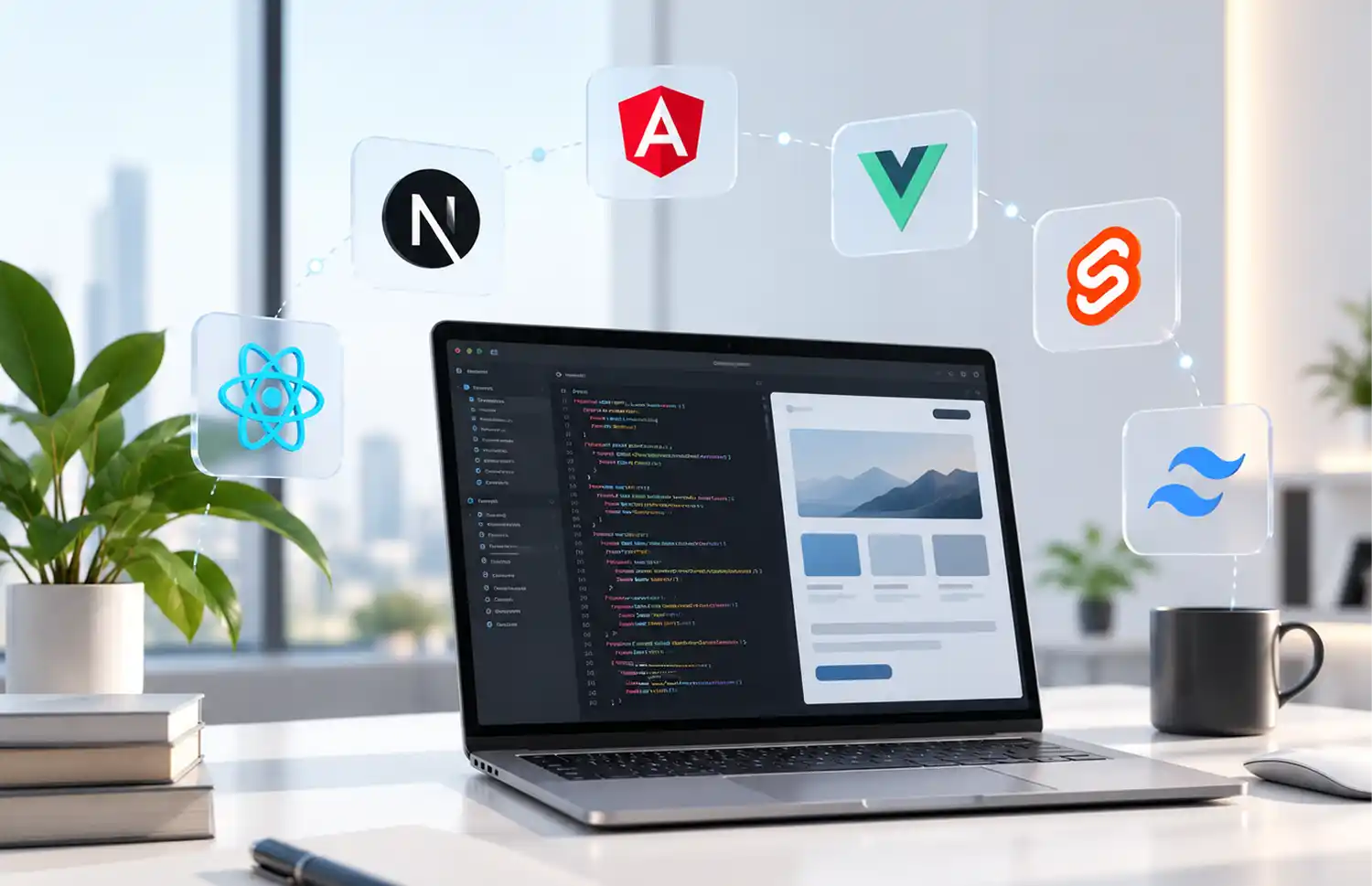
At the same time, frontend development tools and frameworks continue to grow
rapidly. Developers now have access to technologies that improve performance,
simplify workflows, and support scalable application development. From React and Vue
to Next.js and AI-assisted coding tools, the frontend ecosystem is becoming smarter
and more efficient.
This blog explores the top frontend technologies in 2026, their advantages, and why
they continue shaping modern web development.
Why Frontend Technologies Matter
Frontend development directly affects how users interact with a website or
application. Even if a business offers excellent products or services, users may
leave quickly if the website feels slow, confusing, or outdated.
Modern frontend technologies help businesses create:
- Faster-loading websites
- Better mobile experiences
- Smooth navigation and interactions
- Visually appealing interfaces
- Scalable applications
- SEO-friendly websites
Frontend technologies also influence customer trust. A modern and responsive website
often creates a stronger impression compared to a poorly optimized interface. As
user expectations continue growing, businesses are investing more in frontend
development to improve customer experience and engagement.
1. React
React continues to remain one of the most widely used frontend technologies in 2026.
Developed by Meta, React is known for its flexibility, reusable components, and
large ecosystem.
One of the main reasons developers prefer React
is its component-based structure. Instead of building everything from scratch,
developers can create reusable UI components that simplify development and
maintenance.
React works well for:
- E-commerce websites
- SaaS platforms
- Business websites
- Dashboards
- Social media applications
- Enterprise applications
Another major reason behind React’s popularity is the growth of Next.js, which is
built on top of React. Together, they help developers build faster and more
SEO-friendly applications.
Even after several years, React continues to remain a preferred choice for modern
frontend development because of its scalability and strong community support.
2. Vue.js
Vue.js has continued gaining popularity because of its simplicity and
developer-friendly approach. Many developers consider Vue easier to learn compared
to larger frameworks.
Vue offers clean documentation, a smooth learning curve, and a lightweight structure
that helps developers build applications quickly without excessive complexity.
Some advantages of Vue.js include:
- Easy setup
- Faster development
- Good performance
- Flexible architecture
- Smooth integration with existing projects
Vue 3 has also improved performance and introduced better state management features,
making it more suitable for larger applications.
In 2026, Vue is widely used by startups and businesses looking for efficient
frontend development without overly complicated workflows.
3. Angular
Angular
remains a strong choice for enterprise-level frontend development. Developed by
Google, Angular provides a complete framework with built-in tools for routing,
forms, testing, and state management.
Unlike lightweight libraries, Angular offers a more structured development
environment. This makes it useful for large-scale applications where consistency and
long-term maintainability are important.
Angular is commonly used for:
- Banking platforms
- Healthcare systems
- ERP software
- Enterprise dashboards
- Large business applications
Although Angular has a steeper learning curve compared to React or Vue, many
organizations continue choosing it because of its scalability and organized
architecture.
4. Next.js
Next.js
has become one of the fastest-growing frontend technologies in recent years. Since
website speed and SEO are becoming increasingly important, many developers now
prefer Next.js over traditional frontend setups.
Built on React, Next.js supports:
- Server-side rendering
- Static site generation
- Faster page loading
- Better SEO optimization
- Improved website performance
Businesses using content-heavy websites, ecommerce platforms, and SaaS products are
increasingly adopting Next.js because it improves both user experience and search
visibility.
In 2026, Next.js is considered one of the strongest frontend frameworks for
performance-focused web development.
5. Svelte
Svelte stands out because of its different approach to frontend development. Instead
of relying heavily on browser-side processing, Svelte shifts much of the work during
compilation.
This results in:
- Smaller application sizes
- Faster loading speeds
- Better runtime performance
- Less browser overhead
Developers also appreciate Svelte because it allows them to write cleaner and simpler
code.
Although Svelte still has a smaller ecosystem compared to React or Angular, its
popularity continues growing among developers who prioritize speed and simplicity.
6. TypeScript
TypeScript has become an important part of modern frontend development. It builds on
JavaScript by adding static typing, which helps developers detect errors earlier and
manage large codebases more effectively.
Many companies now use TypeScript with React, Angular, and Vue because it:
- Improves code quality
- Reduces debugging time
- Makes projects easier to maintain
- Supports better collaboration among teams
As frontend applications become more complex, TypeScript continues gaining importance
in professional development workflows.
7. Tailwind CSS
Tailwind CSS has changed how developers handle frontend styling. Instead of writing
large CSS files, developers can use utility-based classes directly within
components.
This approach helps speed up development while maintaining design consistency.
Tailwind CSS is popular because it supports:
- Faster UI development
- Responsive design
- Easier customization
- Cleaner styling workflows
- Reduced CSS maintenance
Many modern websites and SaaS platforms now use Tailwind CSS alongside React, Vue,
and Next.js.
Frontend Trends to Watch in 2026
Frontend development is continuing to evolve rapidly, and several trends are shaping
how websites and applications are being built.
AI-Assisted Development
AI-powered coding tools are becoming increasingly common in frontend workflows.
Developers use them for code suggestions, testing support, UI generation, and
reducing repetitive tasks. These tools help teams improve productivity without
replacing human creativity and decision-making.
Performance-First Development
Website performance continues to remain a major priority. Faster-loading websites
improve user engagement and search visibility, which is why developers are focusing
more on lightweight frameworks and optimized rendering methods.
Component-Driven Design
Reusable components are becoming the standard approach in frontend development. This
helps development teams maintain consistency across large applications while
reducing repeated work.
Server-Side Rendering Growth
Technologies like Next.js are gaining popularity because server-side rendering
improves both speed and SEO performance. More businesses are now choosing frameworks
that support better optimization techniques.
Common Challenges in Frontend Development
Frontend development continues to evolve rapidly, but developers still face several
challenges while building modern websites and applications. As user expectations
grow, maintaining performance, consistency, and usability across platforms requires
continuous improvement and testing.
-
Browser Compatibility: Different browsers may display websites
differently, making cross-browser testing important for maintaining a
consistent user experience.
-
Performance Optimization: Heavy animations, large media files, and
complex features can slow down websites if frontend performance is not
properly optimized.
-
Responsive Design: Websites must work smoothly across mobiles, tablets,
laptops, and desktops, which makes responsive design an essential part
of frontend development.
-
State Management: Managing data across multiple components becomes more
challenging as applications grow larger and more interactive.
-
Security Concerns: Frontend applications must also handle security
carefully to reduce risks related to user data and API communication.
Comparison of Top Frontend Technologies in 2026
| Technology |
Best For |
Learning Curve |
Performance |
Popularity |
| React |
Scalable web applications |
Moderate |
High |
Very High |
| Vue.js |
Startups and small-to-medium projects |
Easy |
High |
High |
| Angular |
Enterprise applications |
Steep |
High |
High |
| Next.js |
SEO-focused and fast websites |
Moderate |
Very High |
Rapidly Growing |
| Svelte |
Lightweight applications |
Easy |
Very High |
Growing |
| TypeScript |
Large frontend projects |
Moderate |
High |
Very High |
| Tailwind CSS |
UI styling and responsive design |
Easy |
High |
Very High |
How to Choose the Right Frontend Technology
Choosing the right frontend technology depends on the goals and complexity of the
project. There is no single technology that works perfectly for every
business.
Here are a few factors developers and businesses usually consider:
Project Size
Large enterprise applications may require structured frameworks like Angular,
while
smaller projects may benefit from Vue or Svelte.
SEO Requirements
Businesses focusing heavily on search visibility often prefer frameworks like
Next.js
because of their server-side rendering capabilities.
Development Speed
Some technologies help developers build applications faster because of simpler
workflows and reusable components.
Scalability
Applications expected to grow significantly over time may require technologies
with
strong ecosystem support and long-term maintainability.
Team Expertise
The development team’s familiarity with a technology also plays a major role in
choosing the right frontend stack.
Conclusion
Frontend development in 2026 is becoming more focused on speed, scalability, user
experience, and efficient workflows. Technologies like React, Vue, Angular,
Next.js,
and Svelte continue shaping modern web development, while tools like TypeScript
and
Tailwind CSS are improving how developers build and manage applications.
The best frontend technology depends on the specific needs of a project,
including
performance goals, scalability, SEO requirements, and development timelines.
Businesses that invest in the right frontend technologies can create faster,
more
engaging, and user-friendly digital experiences that support long-term
growth.
Looking to build a modern, high-performing website or web application? Webomindapps helps
businesses create responsive, user-focused, and scalable frontend solutions
using
the latest technologies and development practices.